Empire Journal | Best months to visit the Maldives, Bora Bora, Bali, Seychelles and Fiji for weather + content
Best Months to Visit Maldives, Bora Bora, Bali, Seychelles, and Fiji
A definitive editorial guide on timing luxury travel to five iconic island destinations for optimal weather, water clarity, and visual content production.
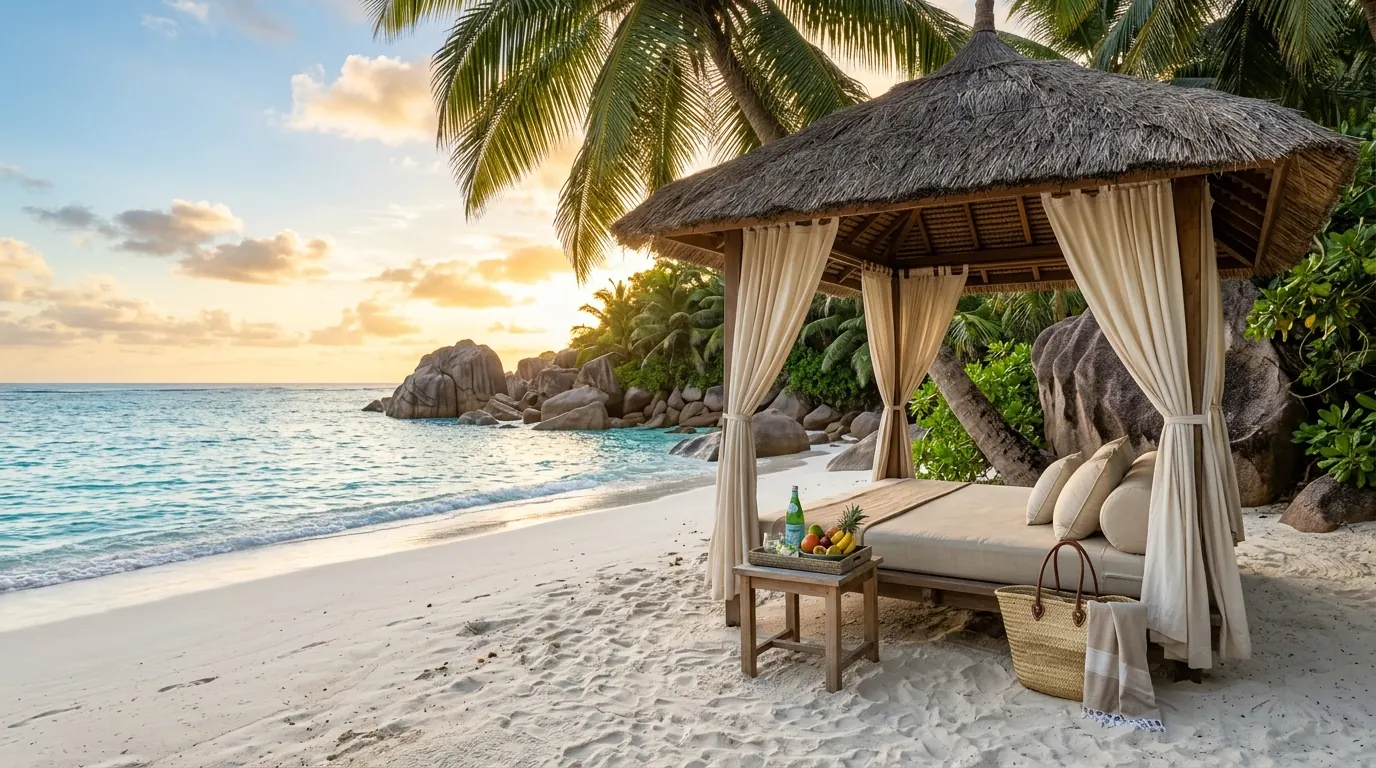
Timing an overwater luxury shoot or high-end island trip requires balancing rainfall, trade winds, and underwater visibility. While tropical destinations offer warm temperatures year-round, microclimates and seasonal monsoons dictate whether you get glass-like lagoon reflections or persistent cloud cover. Here is an editorial breakdown of the precise calendar windows to capture five iconic luxury destinations at their visual peak.
The Maldives: November through April
The Maldivian archipelago experiences two distinct monsoon seasons. The Iruvai (northeast monsoon) runs from December through April, delivering long days of low humidity, calm turquoise lagoons, and extraordinary water clarity across both North and South Malé Atolls.
- Peak Lighting & Sky Conditions: January through March offers the most stable blue skies and flat water, ideal for drone visuals over resorts like Soneva Jani or The Ritz-Carlton Maldives, Fari Islands.
- The Shoulder Tradeoff: Late April and November act as shoulder months. Rates drop slightly, but afternoon rain showers become more frequent.
- Content Considerations: If underwater marine photography is your priority, the southwest monsoon (Hulhangu) from June through November brings high concentrations of plankton. While underwater visibility decreases slightly, this is the prime season to capture whale sharks and manta rays at Hanifaru Bay in the Baa Atoll.
Bora Bora: May through October
French Polynesia enters its dry season, known locally as the austral winter, from May through October. Temperatures hover comfortably around 80°F (27°C) with lower humidity and minimal rainfall, providing clear line-of-sight to Mount Otemanu.
- Optimal Shooting Window: June, July, and August yield crisp daylight and saturated lagoon tones off the motus surrounding Four Seasons Resort Bora Bora and The St. Regis Bora Bora Resort.
- Wind Dynamics: The mara’amu (southeast trade wind) can blow strongly from June to August. While this keeps humidity low and clears rain clouds, it can create chop on exposed outer reef waters.
- Wildlife Window: August through October coincides with the humpback whale migration off Tahiti and neighboring islands, offering world-class marine photography opportunities.
Bali: May through September
Unlike equatorial archipelagos, Bali features a distinct dry season driven by Australian air masses moving north between May and September. This period eliminates the heavy downpours of the wet season and dramatically improves ambient light quality across the island's diverse landscapes.
- Jungle and Coastal Clarity: During June, July, and August, morning mist clears quickly in Ubud, while coastal regions like Uluwatu and Canggu experience crisp golden hour light and reliable swell for surf shooting.
- Island Excursions: Water clarity around Nusa Penida and Nusa Lembongan peaks during these dry months, making it the premier window for capturing underwater content at Manta Point.
- Shoulder Months: April and October serve as transition periods with lighter crowds, though afternoon convective cloud cover begins to build.
Seychelles: April–May and October–November
The Seychelles inner granite islands—including Mahé, Praslin, and La Digue—are heavily influenced by trade winds. To capture pristine beaches without wind-blown ocean debris or rough seas, the transition periods between trade wind seasons are essential.
- The Wind Transition: The southeast trade winds blow hard from May to September, bringing cooler air but rough seas and washed-up seaweed onto south-facing beaches like Anse Intendance. The northwest monsoon brings rain from December to March.
- Prime Shooting Months: April, May, October, and November offer calm wind conditions, mirror-like seas, and underwater visibility reaching up to 30 meters around Anse Source d'Argent and Anse Lazio.
- Lighting Quality: High humidity during these shoulder months produces dramatic sunset colors, particularly around the granite formations of North Island and Six Senses Zil Pasyon.
Fiji: May through October
Fiji's 330 islands experience their dry season during the South Pacific winter, from May through October. Rainfall drops significantly, tropical cyclone risk drops to near zero, and relative humidity is manageable.
- Archipelago Highlights: The Mamanuca Islands and Yasawa Islands receive the highest sun hours in Fiji during this window. Properties like Kokomo Private Island and Laucala Island showcase peak lagoon coloration.
- Underwater Conditions: Water clarity reaches its maximum between June and August, perfect for capturing soft coral reefs in the Bligh Water or filming bull sharks in Beqa Lagoon.
- Temperature Profile: Cooler night temperatures mean less air conditioning haze on camera lenses during early morning shoots, though ocean water temperatures drop slightly to around 77°F (25°C).
Strategic Summary for Creators
- Best for Glassy Water & Lagoon Reflections: Maldives (Jan–Mar), Seychelles (Apr–May, Oct–Nov).
- Best for Landscape & Mountain Light: Bora Bora (Jun–Sep), Bali (May–Aug).
- Best for Marine Megafauna: Maldives Baa Atoll (Jul–Oct), French Polynesia Humpbacks (Aug–Oct), Fiji Sharks (May–Oct).
Where to actually book this
- Luxury Escapes — Curated 5-star hotel packages at member pricing.
Affiliate links: we earn a small commission at no extra cost to you. See our Disclaimer.