The real problem is capture, not creativity
Most creators come home with a camera roll full of beautiful footage that cannot be edited into anything, because it is all the same shot type: wide, static, mid-afternoon. The fix happens on location, not in the edit.
Content volume comes from coverage. Every scene you film should produce a hook shot, a wide establishing shot, two or three detail shots, one shot with a person in frame, and a short piece of talking or ambient audio. Those five components can be recombined into many different posts; the same scene shot once cannot be.
Shoot in sequences rather than clips. Arrival, room reveal, breakfast, the drive, the sunset, the dinner — each is a small story with a beginning and an end, and each is a post.
Plan the content before you leave
Decide the trip's content themes before you pack: usually three or four, such as where to stay, what to eat, what it costs, and one mistake to avoid. Every theme becomes a mini-series, and a series is what gives an audience a reason to follow rather than to watch once.
Write the hooks first
Twenty to thirty hooks written at home are worth more than a hundred written tired in a hotel room. Knowing the hook tells you exactly what to film, which is why hook-first planning produces usable footage.
Build a shot list per location
Six to ten shots per stop, with the golden-hour window noted. A shot list stops the afternoon-wide-shot problem before it starts.
Book the content, not just the trip
The dinner reservation, the sunrise slot, the boat, the empty-lobby hour — these are content assets and they need to be in the itinerary with times attached.
Note the answers people will ask for
Prices, transfer times, room categories, whether it was worth it. Written down on location, these become carousels, captions, and blog posts later; reconstructed from memory, they become vague content that doesn't convert.
A four-week publishing map from one trip
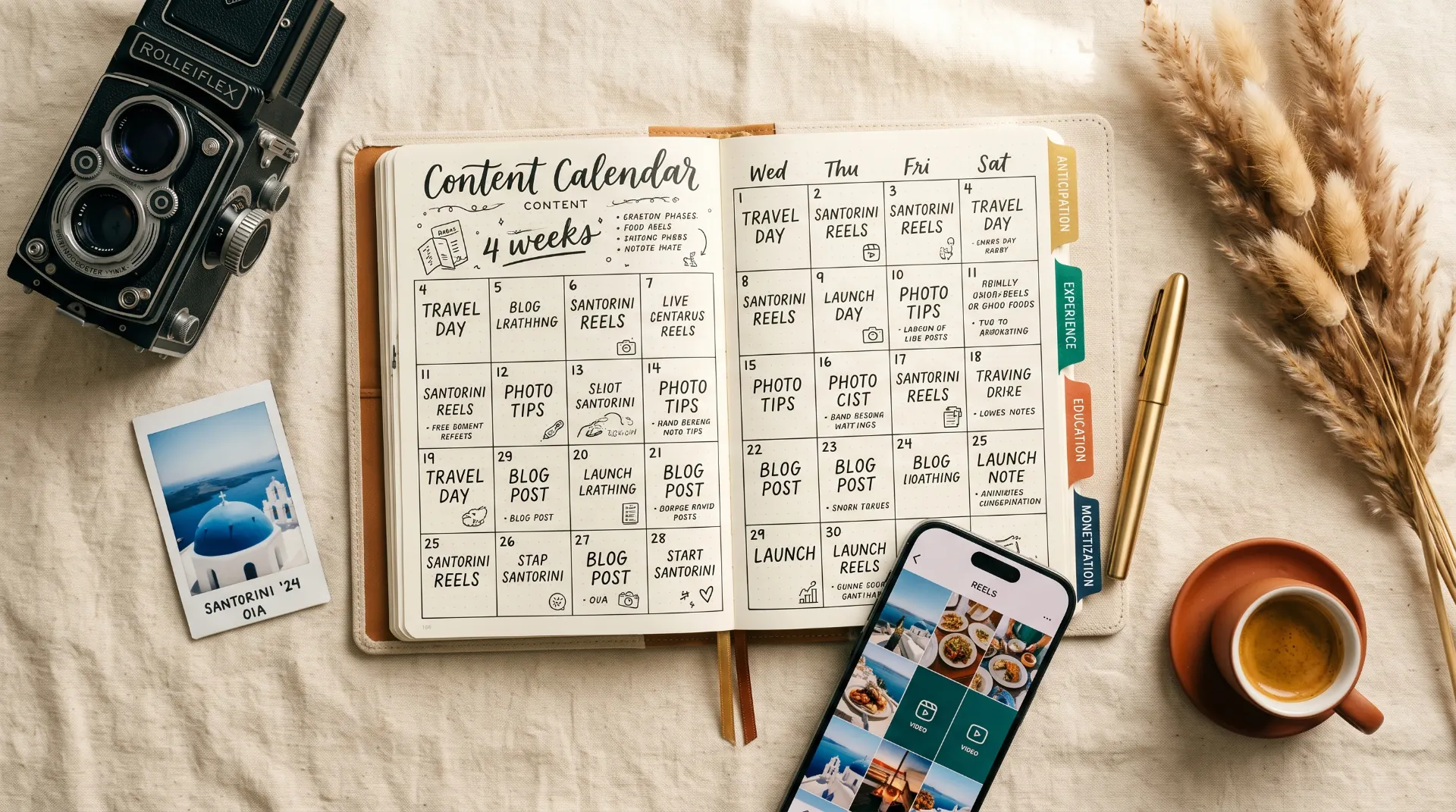
One well-covered trip comfortably supports four weeks of publishing when the footage is sorted by intent rather than chronology. A structure that works:
Week 1 — attention
The strongest visual moments and the highest-tension hooks. This is where reach comes from, so lead with the single best sequence rather than saving it.
Week 2 — utility
The practical posts: costs, transfers, where to stay, what to book. These get saved and shared, which is what puts you in front of people actively planning — and they are where affiliate links belong.
Week 3 — depth and story
The longer edit, the behind-the-scenes, the mistake you made, the honest review. This builds trust and is what converts a viewer into a follower and eventually a buyer.
Week 4 — repurposing and reach
Cut-downs, a carousel of stills, a written guide, Pinterest pins, a newsletter recap. Search-driven platforms keep earning long after the feed forgets, so this is the highest-ROI week per hour spent.
Insider tip
Publish the same story in different formats rather than trying to invent new stories. A single hotel stay legitimately supports a review, a cost breakdown, a room comparison, a food sequence, and a 'is it worth it' verdict.
Batch the editing
Editing one video at a time is the slowest possible workflow. Cull first, then group clips by scene, then cut every video for one platform in one session while your settings, captions, and export presets are already loaded.
Keep a folder structure you will still understand in six months: trip, then location, then scene. Most creators lose more content to disorganisation than to bad footage — a labelled archive is what lets you publish about a trip again nine months later when the destination comes back into season.
Extend the trip's life beyond the feed
Social posts decay in days; search content compounds for years. The same trip should also produce a written guide or blog post, a Pinterest set, and one email to your list — because those keep sending traffic and affiliate bookings long after the reels stop.
Then close the loop: whatever performed best becomes a template. Same hook structure, same shot list, next destination. Consistency in travel content is mostly repetition of a format that already worked.
Rich Off Travel AI
Where Rich Off Travel AI fits
This entire system depends on the plan existing before you fly, which is the part most creators skip. Rich Off Travel AI generates the trip and the content plan together: a day-by-day itinerary with golden-hour filming windows and reservations to chase, plus roughly thirty hooks, captions, and shot lists mapped to Reels, TikTok, YouTube, and Pinterest for that specific route.
In other words it produces the hook list and shot list described above for your actual destination, so the planning work happens once instead of every trip.
Common questions
How much footage do I actually need for a month of content?+
Coverage matters more than volume. Roughly eight to twelve fully covered scenes — each with a hook shot, a wide, details, a human element, and audio — supports four weeks of publishing.
Should I post while travelling or after?+
Post a light layer live for stories and immediacy, then publish the structured series afterwards. Trying to edit your main content on location usually costs you footage you can't get back.
Isn't repurposing the same trip repetitive?+
Only if you repeat the format. The same stay told as a review, a cost breakdown, and a shot-for-shot walkthrough reads as three different pieces to three different viewers.
Where do affiliate links belong in this plan?+
In the utility content and the written guide, where intent is highest. Adding links to pure entertainment posts converts poorly and clutters the caption.
Keep reading
Creator business
How to Build Multiple Income Streams Around Travel Content
Five revenue lines, the order to build them in, and how to tell which one deserves your next hour.
Creator monetization
How Travel Creators Can Make Money Without 100K Followers
The five income lines that work at 2,000 followers, what to charge, and the proof brands actually ask for.
Hotel partnerships
What Hotels Actually Need From Travel Content Creators
The four things hospitality marketers are actually buying — and the delivery standards that get you rebooked.
Back to the Resources hub — or read our disclaimer for how we handle affiliate links.