Start with the question your audience already asks
Travel products fail when they are formats in search of a problem — a 60-page ebook nobody requested, a preset pack in a market saturated with free ones. They work when they answer a question your audience is already asking you repeatedly.
The evidence is already in your inbox. Read your last hundred DMs and comments and group them. Almost always a small number of questions dominate: which hotel, how much did it cost, how do you plan it, what do you pack, how did you get that shot, how do you afford it. Each cluster is a product hypothesis, and the largest cluster is your first product.
Then narrow it. 'Travel planning guide' is not a product. '10-day Amalfi Coast itinerary with the exact hotels, transfers, dinner reservations and costs' is, because the buyer can tell instantly whether it solves their problem.
Validate before you build
Building first is expensive in the only currency that matters, which is your attention. Validate cheaply instead: publish free content answering the same question and see whether it gets saved and asked about, ask your audience directly which of two versions they want, or offer a short waitlist and count the sign-ups.
A pre-sale is the strongest signal available. A small number of people paying for something before it exists tells you more than a thousand people saying they would buy it. If nobody pre-orders, you have saved yourself the build, not failed.
Insider tip
Validate the specific promise, not the topic. People are enthusiastic about travel in general and specific about what they will pay for.
Choosing the format
Itinerary or destination guide
The most natural travel product: a real trip, documented with hotels, transfers, reservations, costs and timings. Sells best immediately after content about that destination performs well.
Templates and planning systems
Packing systems, trip budget spreadsheets, content calendars, pitch email templates. Fast to build, easy to demonstrate, and strong for audiences who want a process rather than a place.
Presets and editing tools
Only worth it if your visual style is genuinely a reason people follow you. Otherwise you are competing with free.
Courses and workshops
Higher price, higher trust required, more support. Best once you have already sold a smaller product to the same audience and know exactly where they get stuck.
Membership or subscription
Recurring revenue in exchange for a recurring obligation. Only sustainable if you genuinely have something new to deliver every month.
Build it small, and make it usable
Scope your first product so it can ship in weeks, not quarters. A tight product that solves one problem completely outsells a sprawling one that half-solves five, and it gives you buyer feedback far sooner.
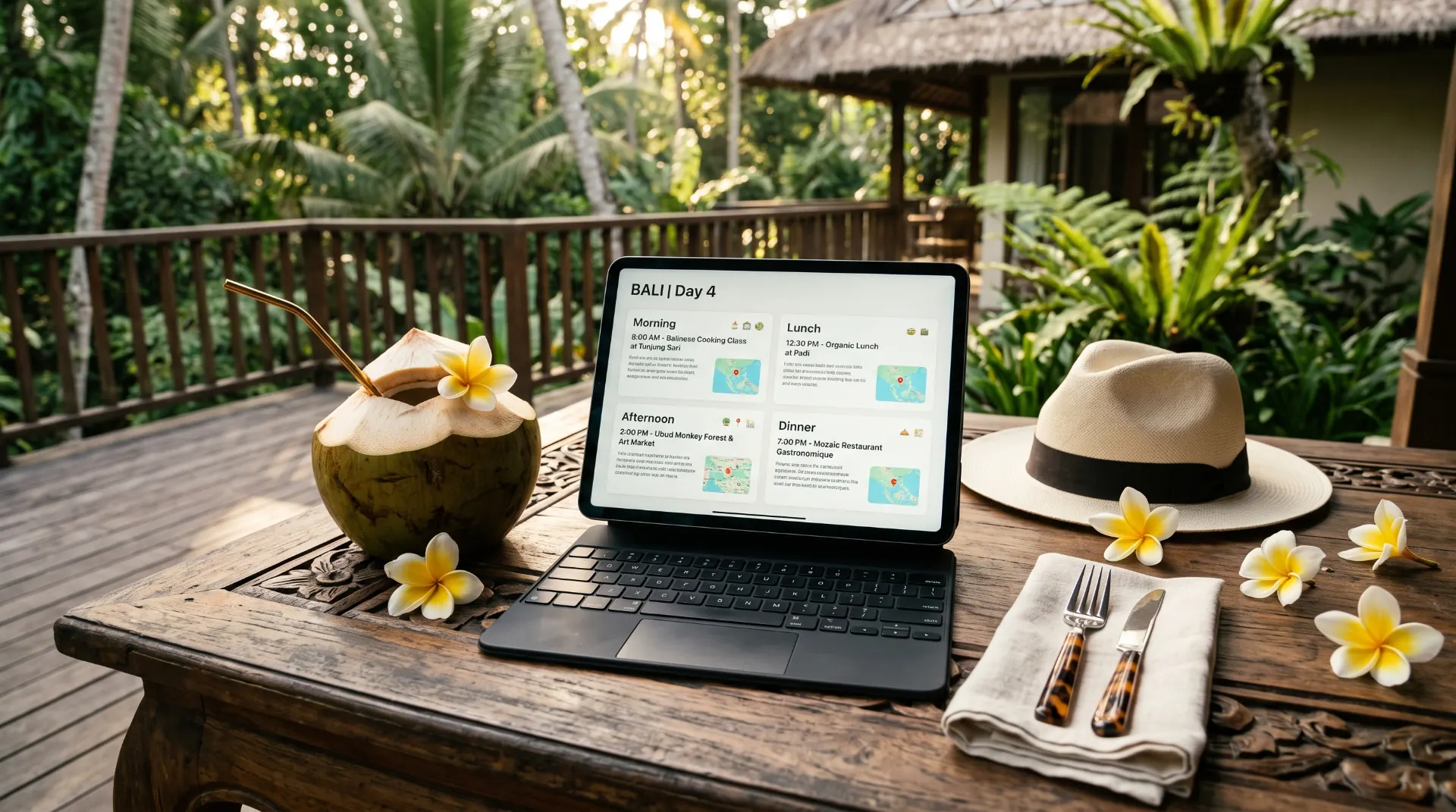
Delivery quality is part of the product. Clean typography, a sensible structure, working links, and a format that behaves on a phone — because your buyer will open it on a phone. If it is an itinerary, make it skimmable: day, area, where to stay, where to eat, what it costs, what to book in advance.
Include the boring, high-value specifics other creators leave out: actual costs, transfer times, booking lead times, what you would skip. That detail is the difference between a product people recommend and one they quietly refund.
Pricing and selling
Price on the outcome and the alternative, not on page count. A guide that saves someone twenty hours of research and one bad hotel booking is not a two-dollar product. Most first travel products live in the low tens; templates sit lower, cohort-based teaching much higher.
The sales page needs five things: who it is for, the specific problem, exactly what is inside, what changes after they use it, and a refund policy stated plainly. Add real screenshots of the inside — the single most common reason a travel product doesn't convert is that the buyer cannot see what they are getting.
Launch to the audience you already have, from content that already performed. The best time to sell an Amalfi itinerary is the week your Amalfi content is working, not two months later.
Insider tip
Never invent testimonials or results. Use real buyer feedback once you have it, and say nothing until then.
After launch: iterate on real feedback
Ask every buyer one question: what did you still have to look up? Their answer is your version two, and iterating on a product that already sells is far more profitable than launching a new one.
Then build the distribution habit — a free lead piece that solves a slice of the same problem, an email list that receives it, and a permanent link in your bio and in the written content that ranks. Products earn quietly for years when the traffic that feeds them is search-driven rather than feed-driven.
Rich Off Travel AI
Where Rich Off Travel AI fits
The hardest part of a travel product is assembling the specifics — the costs, timings, reservations and route detail buyers actually pay for. Rich Off Travel AI generates that structure for any trip: a day-by-day itinerary with reservations and filming windows, the content plan around it, and a digital product idea tuned to the destination as part of every trip's monetization plan.
In practice creators use it as the skeleton: generate the plan for a trip you have actually taken, then replace the generic guidance with your own on-the-ground detail, photos and opinions. That is what makes the finished product yours rather than generic.
Want to learn digital products properly?
Everything above is the travel-specific version of a broader skill set: packaging knowledge into something sellable, then marketing and selling it. If you want to learn that side in depth rather than in the context of one industry, we also run a separate educational platform for it.
EProducts Empire is an educational platform that teaches beginners and entrepreneurs how to create, package, market, and sell digital products online — the product design, positioning, pricing, and sales fundamentals that apply whether you are selling a travel itinerary or anything else.
It is a separate business from this site, so treat it as further education rather than a travel resource: come here for the travel creator playbook, go there to learn digital product creation and selling as a discipline.
Common questions
What is the easiest first digital product for a travel creator?+
Usually a detailed itinerary or destination guide for a trip you have already taken, because the research is done and the audience that watched the content is the audience that buys it.
How do I know if anyone will buy it?+
Validate before building — repeated questions, a waitlist, or ideally a pre-sale. Interest in a topic is not the same as willingness to pay for a specific promise.
How much should I charge?+
Price against the outcome and the buyer's alternative rather than length. Most first travel guides sit in the low tens; templates lower; live teaching considerably higher.
Do I need a big audience to sell a product?+
No, but you need a trusting one and a specific promise. Small, engaged audiences frequently outperform larger, less specific ones on product sales.
Keep reading
Creator business
How to Build Multiple Income Streams Around Travel Content
Five revenue lines, the order to build them in, and how to tell which one deserves your next hour.
Creator monetization
How Travel Creators Can Make Money Without 100K Followers
The five income lines that work at 2,000 followers, what to charge, and the proof brands actually ask for.
Content strategy
How to Turn One Trip Into a Month of Travel Content
Plan before you fly, capture to a shot list, then batch and schedule four weeks of posts from one trip.
Back to the Resources hub — or read our disclaimer for how we handle affiliate links.