Empire Journal | Best months to visit the Maldives, Bora Bora, Bali, Seychelles and Fiji for weather + content
Best Months for Maldives, Bora Bora, Bali, Seychelles, and Fiji
A season-by-season guide to booking five iconic island destinations for optimal water clarity, calm seas, and editorial-grade production.
Timing an island production requires matching dry microclimates with low surface wind. Booking the wrong season turns azure lagoons into turbid grey water, grounds drone flights, and strands transfers at inter-island docks. For luxury travelers and digital creators alike, securing calm seas and high sun angles is the difference between magazine-grade imagery and days lost to tropical squalls.
Indian Ocean Windows: Maldives and Seychelles
The Maldives experiences two distinct monsoons dictated by shifting trade winds. The dry northeast monsoon, known locally as the Iruvai, runs from December through April. This window offers the lowest rainfall, flat lagoon conditions, and peak underwater visibility across North and South Malé Atolls and Baa Atoll. High-end resorts such as The Ritz-Carlton Maldives, Fari Islands and The St. Regis Maldives Vommuli Resort command peak cash rates during this corridor because water clarity is at its annual zenith.
The Seychelles sits further south and operates on a different weather cycle. The archipelago deals with the southeast trade winds from May through September, which bring drier weather but rougher seas and heavy seaweed drift along south-facing beaches on Mahé and Praslin. For pristine water and mirror-flat conditions, the prime transitional months are April and October. During these shoulder windows, the wind drops entirely, water visibility reaches thirty meters, and light conditions on beaches like Anse Source d'Argent on La Digue are unmatched.
Wind direction dictates water clarity and drone stability far more than air temperature ever will.
South Pacific Clarity: Bora Bora and Fiji
French Polynesia sits in the southern hemisphere, meaning its winter coincides with North American summer. The dry season in Bora Bora spans May through October, characterized by lower humidity, clear skies, and consistent southeast trade winds known as the mara'amu. Properties like the Four Seasons Resort Bora Bora and The St. Regis Bora Bora Resort offer the clearest views of Mount Otemanu during these months. If you shoot aerial footage, midday flights between June and August capture the full gradient of the lagoon without cloud shadows.
Fiji follows a comparable meteorological pattern. The dry season runs from May to October across the Mamanuca and Yasawa island groups. Rainfall peaks between December and mid-April during the South Pacific cyclone season, bringing high humidity and frequent downpours that disrupt inter-island boat runs. For high-end travelers heading to private island properties like Kokomo Private Island or Laucala Island, the winter window ensures calm outer reefs, optimal surf conditions at Cloudbreak, and uninterrupted sunshine.
The Indonesian Dry Season in Bali
Unlike much of mainland Southeast Asia, Bali stays dry when summer arrives in the northern hemisphere. The island experiences its wet monsoon from November to March, marked by heavy afternoon downpours, rough beach breaks, and drift debris on the southwest coast. The premier window to visit is May through September, when the southeast monsoon brings cool, dry air from Australia.
During this peak season, the Bukit Peninsula, home to cliffside properties in Uluwatu such as the Bulgari Resort Bali, enjoys clean offshore breezes and crystal-clear water. Inland around Ubud, clear mornings give way to soft afternoon light across the rice terraces near Mandapa, a Ritz-Carlton Reserve. Creators monetizing destination itineraries through our travel affiliate monetization guide will find this period delivers the highest conversion rates for resort bookings.
Production Tradeoffs Across Shoulder Months
Deciding between peak dry season and the shoulder months comes down to whether you prioritize solitude or guaranteed weather. Peak windows guarantee flat water, but they bring full resort occupancy, visible crowds in common areas, and rigid minimum-stay requirements.
- Shoulder window advantages: Lower room rates, flexible villa check-outs, and uncrowded beaches at sunrise.
- Shoulder window risks: Sporadic afternoon convective storms, shifting surface chop, and delayed boat transfers.
If your schedule requires open decks and empty overwater boardwalks for filming, target the transitional weeks. Late April in the Maldives, early May in Bora Bora, and late September in Bali provide ninety percent of the weather reliability with half the foot traffic. Review our curated luxury travel dispatches for property-specific shooting strategies across these regions.
Before locking in non-refundable villa bookings, audit flight routings to ensure seaplane and private charter schedules align with your arrival hours by using our premium flight search tools.
Frequently asked questions
What is the absolute best month for water clarity in the Maldives?
February is historically the driest month in the Maldives, offering the calmest seas and the highest underwater visibility for diving and overwater photography.
When is the rainy season in Bora Bora?
The wet season in Bora Bora runs from November through April, bringing elevated humidity, higher temperatures, and frequent tropical downpours.
Can you visit Bali during the rainy season for content creation?
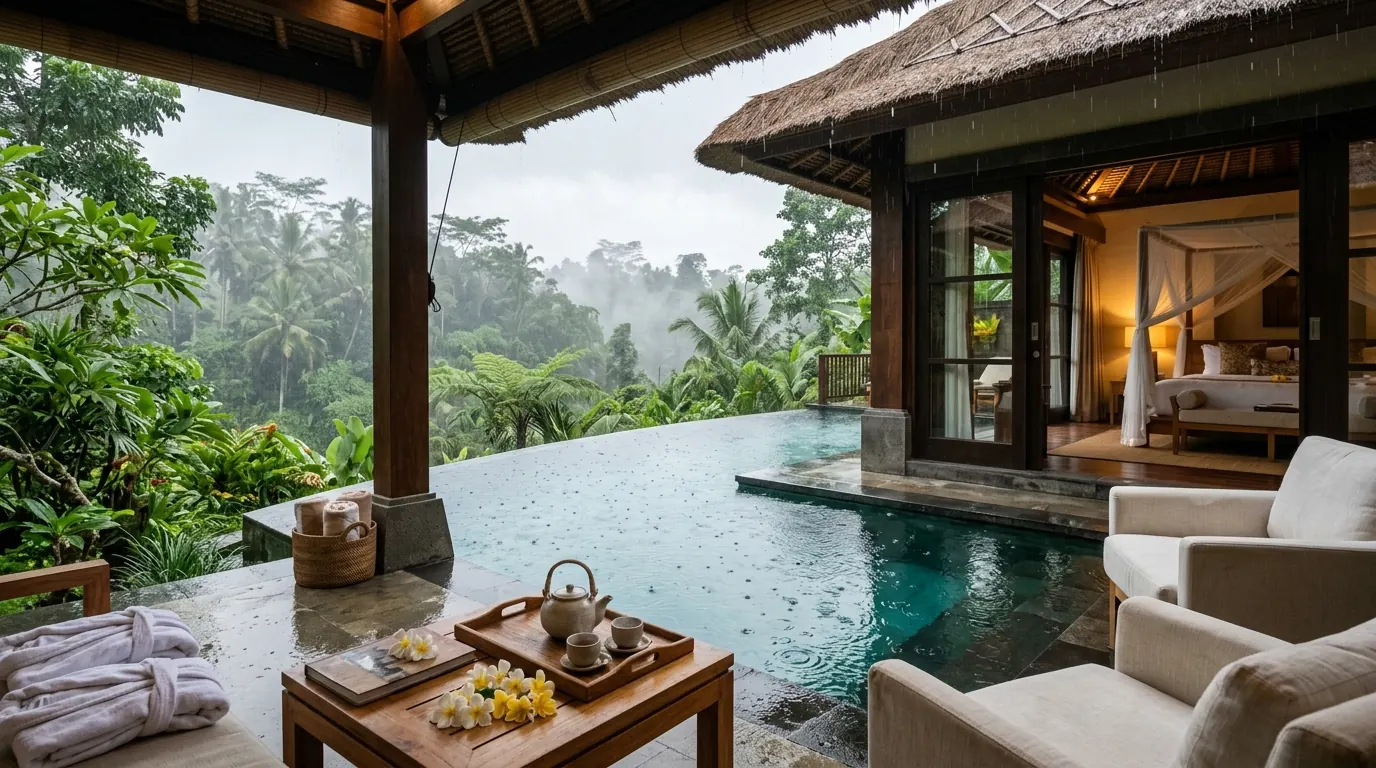
You can visit between November and March for moody jungle visuals in Ubud, but coastal beaches suffer from poor water clarity and ocean debris during this period.
Which months have the least wind in the Seychelles?
April and October are the transition months between the trade winds, providing the calmest seas and optimal conditions for boat charters and underwater visibility.
Open a Travelpayouts account
Free to join. You choose which travel programs to work with, and nothing is charged to you or to your readers.
Go to TravelpayoutsAffiliate link · Empire Experience may earn a commission